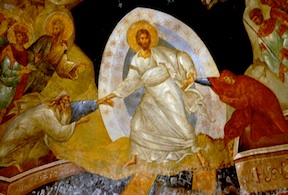
Sunday, April 8, 2012

The Mental Health Landscape


 Brice at his baptism/imago dei  
Photography by Jeffrey Louden

Last week I drove from Denver to Durango. I crossed the expansive San Luis Valley (where I lived for ten years). And from Durango I could almost see into northwest New Mexico where I lived and worked on the Navajo reservation a long time ago. There’s no doubt about it, we are surrounded by a magnificent natural landscape in the Rocky Mountain Synod. One might guess that we live in a constant state of wonder and amazement. However, when it comes to our mental health, there are some troubling patterns. In a 2007 report, Mental Health America compared depression levels and suicide rates in all 50 states and the District of Columbia. The report, "Ranking the States: An Analysis of Depression Across the States" assessed the following measures:  (1) the percentage adults who experienced a major depressive episode in the past year, (2) the percentage of adolescents who experienced a major depressive episode in the past year, (3) the percentage of adults who experienced serious psychological distress, and (4) the average number of days in the past 30 days in which the population reported that their mental health was not good. The report also looked at suicide rates. Of the states in the Rocky Mountain Synod region, Texas was the 10th healthiest state with respect to depression, Colorado ranked 34th, New Mexico ranked 36th, Wyoming ranked 42nd, and Utah ranked last at 51st. The following factors were significantly associated with better depression status and lower suicide rates: 

     Mental health resources – The more mental health professionals per capita, the lower the suicide rate.

     Barriers to treatment - The lower the percentage of the population reporting that they could not obtain healthcare because of costs, the lower the suicide rate and the better the state's depression status. The lower the percentage of the population that reported unmet mental healthcare needs, the better the state's depression status.

     Mental health treatment utilization - The higher the number of antidepressant prescriptions per capita in the state, the lower the suicide rate.

     Socioeconomic characteristics - The more educated the population and the greater the percentage with health insurance, the better the state's depression status and the lower the suicide rate.

So, what does this have to do with faith? Well, it has a lot to do with caring for the neighbor!
First of all, we can advocate for better and more mental health care. In rural Colorado, for example, some families must drive more than 100 miles to see a mental health professional. And throughout Colorado, if they receive mental health or substance use services, youth and adults of color are disproportionately served in public human services settings, including child welfare, juvenile justice, and corrections.
Second, we can challenge the traditions (myths?) of independence and self-sufficiency that are so highly valued in our western states but also contribute to isolation, stigma around mental health, and a reluctance to seek help. A person experiencing depression may feel utterly lost and alone. In our churches and communities we can help to create safe places where we talk about mental health and encourage people to seek help. We are not meant to be alone; we need each other in order to be healthy.
Aging white men have the highest rate of suicide and guns are often the means used. We must have a national conversation about guns as a public health issue. There are sensible methods to both restrict access to guns for depressed and suicidal individuals and still protect ownership rights. Could we help start these conversations in our communities?  We can also start conversations and participate in efforts to address important risk factors for depression (and other mental health problems) such as bullying, discrimination, trauma, and poverty.
Of course these issues not unique to our time and place. Just listen: 

Be gracious to me, O Lord, for I am in distress; my eye wastes away from grief, my soul and body also. For my life is spent with sorrow, and my years with sighing; my strength fails because of my misery, and my bones waste away.  

Psalm 31: 9-10
                               

            Carolyn Swenson
            Healthcare and public health professional
            Denver (Member of St. Paul Lutheran) 

Hail thee, festival day!


Hail thee, festival day! 
Blest day to be hallowed forever;
Day when our Lord was raised,
Breaking the kingdom of death.
                                 ELW 394

When we were baptized in Christ Jesus,
we were baptized into his death.
We were buried therefore with him by
baptism into death, so that as Christ was
raised from the dead by the glory of the Father,
we too might live a new life.  For if we have been
united with him in a death like his,
we shall certainly be united with him in a
resurrection like his.
                                                      Romans 6

Thine the glory in the night,
No more dying only light;
Thine the river, thine the tree,
Then the Lamb eternally.
Then the holy, holy, holy, celebration jubilee,
Thine the splendor, thine the brightness, only thee only thee.
                                                                        ELW 826

And you shall know that I am the Lord,
When I open your graves, and bring you up from your graves, O my people.
I will put my spirit within you, and you shall live...
                                                                        Ezekiel 37:13-14

A billion voices in one great song,
Now soft and gentle, now deep and strong,
in every culture and style and key,
from hill and valley, with sky and sea,
with Christ we praise you eternally:
Soli Deo Gloria!  Soli Deo Gloria!
                                                      ELW 878

This day I have begotten you.
                                   Psalm 2

 --Bishop Allan Bjornberg

Saturday, April 7, 2012

Dispel the darkness


There are scars on our own hearts from
relationships tragically torn apart

Ray of hope after 9-11
This day, too, is an incarnation. It is the stark embodiment of those horrible places we have been in recent years. The soul-emptying images of 9/11; the persistent death and dying in the war-torn Middle East, a cataclysmic tsunami in Japan.

And there are scars on our own hearts from relationships tragically torn apart, from too many premature deaths, from too many unanswered questions hurled into the face of God.

Today is the embodiment of all the, "WHY?" questions and epithets. Tody is the incarnation of our, "Where were you!!" incriminations.

Christ entombed and absent is the horror we imagine and the accusation we hurl at God.

Because, left to ourselves, we know no other possibility. 

May the light of Christ, rising in glory,
Dispel the darkness of our hearts and minds.
                        Lighting of the candle. The Easter Vigil


Rise, let us leave this place.  The enemy led you out of the earthly paradise, but I will enthrone you in heaven.  I forbade you the tree that was only a symbol of life, but see, I who am life itself am now one with you.  The kingdom of heaven has been prepared for you from all eternity.
                          Ancient Liturgy

That he who by a tree once overcame, might by a tree be overcome.
 
--Bishop Allan Bjornberg

Friday, April 6, 2012

Listen for the hope


Now there was a garden in the place where he was crucified.
John 19:41

Vedran Smailovic, the principal cellist of the Sarajevo Opera, was heartbroken at the massacre that occurred in his city in 1992, when a breadline of citizens waited in front of a bakery and a mortar landed, killing 22 people.

Twenty four hours after the massacre, he did the only thing he knew. He settled his stool beside the smoking crater. And he began to play Albinoni's stirring piece, Adagio. In the midst of the suffering, he played every day for 22 days, while the war surrounded him. One author said, "He dispensed hope in his music, he became hope to his people."

Boston Cello Quartet plays Albinoni's Adagio
The gift he gave to his fellow citizens was hope that the good and beautiful and peaceful things in life would return. 

At the center of our Three Days are our own longings for hope. 

As a cellist myself, I invite you to pause this Good Friday for six minutes, and listen to an arrangement of the piece played by the Cellist of Sarajevo. 

Listen for the hope.

--Pastor Kent Mueller
Director for Administration and Communication 

Thursday, April 5, 2012

So we wait in silence


The landscape of our worship space is left bare


Save me, Lord my God!
By day, by night, I cry out.
Let my prayer reach you;
turn, listen to me.

Lord, I cry out to you all day,
my hands keep reaching out.

Excerpt from Psalm 88 -  The Psalter: A faithful and Inclusive Rendering of the Psalter

Feet have been washed, the sacramental supper received. The liturgy on Maundy Thursday is filled with signs and symbols and we filled with humble blessing.  But there is a shift from full to empty, as the darkest despair of the psalter, Psalm 88, is read or chanted while we watch the books, candles, communion vessels, linens, paraments, and yes, even the cross, lovingly stripped away as the landscape of our worship space is left bare and we prepare for the reality of death and burial. 

The party's over. We are left feeling naked and vulnerable. We are left in deep lament. To deny or avoid such loss and grief is to deny a profound opportunity to turn empty to God. So we wait in silence for that which is yet to come with outreaching hands. Our prayer is devoid of words. We simply embrace the divine mystery of the Passion.   
 
--Madelyn Herman Busse, diaconal minister
Assistant to the Bishop


About the photo:  When Good Shepherd Lutheran Church in Denver closed last year, the building was sold. When the cross was removed from the wall, its radiance remained on the brick wall. The cross now hangs at Rejoice Lutheran Church, Erie, Colorado. (Photo by Dena Williams)

Wednesday, April 4, 2012

The light shines, and the darkness shall not overcome it


In the Reign of God, even mild violence won't do.

...so while reclining next to Jesus, Simon Peter asked him, "Lord, who is it?"  Jesus answered," It is the one to whom I give this piece of bread when I have dipped it in the dish."  So, when he had dipped the piece of bread, he gave it to Judas, son of Simon Iscariot.  After he received the bread, Satan entered into him.  Jesus said to him, "Do quickly what you are going to do."..."  
John 13:25-27

Lordship looks very different where the reign of God is present. This brief encounter at the Last Supper follows immediately after Jesus has washed the feet of his disciples, including the feet of Judas, son of Iscariot! Though not specifically stated in the text, Jesus surely knew Judas' intent, even as the Lord undid his robe and tied the towel around himself. Before sending Judas away, Jesus is Judas' foot-washing servant!
     
Knowing Judas' intent, a more sane action by Jesus would have been to inform the disciples, surround the scoundrel, and have Judas bound and gagged, if not something even tougher! This would certainly delay-maybe even stop outright--the evil that will befall Jesus in the hours and days ahead.
     
But in the Reign of God, even mild violence won't do. We can't read Jesus' mind, but later actions would suggest he was thinking, "Do what you must, Judas, and I shall meet evil head-on in another way."
     
Thus, the prophecy of Isaiah that the Messiah shall be a suffering servant will be fulfilled. Evil intent and betrayal is countered with servanthood-humble servanthood--and faithful obedience, even obedience that leads to a cross. Not only does Jesus not enlist his disciples in some preventative action on the betrayer in their midst, he will not even call upon the Legions of Angels as he is arrested, brutalized and finally killed.
     
Dare we say that Jesus' way of dealing with evil and betrayal has been vindicated, in that over 2,000 years later, the church of Christ again prepares to wash feet, share a meal, walk to the cross, and celebrate an empty tomb?
     
Indeed, Lordship looks very different where the Reign of God holds sway! Love conquers hate. Good shall overcome evil.  The light shines, and the darkness shall not overcome it.  Thanks be to God!

            O Christ, what can it mean for us to claim you as our king?
            What royal face have you revealed whose praise the church would sing?
            Aspiring not to glory's height, to power, wealth or fame,
            you walked a diff'rent, lowly way, another's will your aim.

            Though some would make their greatness felt and lord it over all,
            you said the first must be the last and service be our call.
            O Christ, in workplace, church, and home, let none to power cling;
            for still, through us, you come to serve, a diff'rent kind of king.

            O Christ, What Can It Mean for Us
            ELW #431
            Dufner, OSB, b.1939
 

Pastor Dan Bollman
--Assistant to the Bishop

Tuesday, April 3, 2012

The cross comes sharply into view


There is a wealth of natural beauty throughout the territory called the Rocky Mountain Synod. 

“For the message about the cross is foolishness to those who are perishing, but to us who are being saved it is the power of God.” I Corinthians 1.18
 
There is a wealth of natural beauty throughout the territory called the Rocky Mountain Synod. Driving west on Wyoming State Highway 26 from Dubois, and on the downward side of Togwatee Pass, there it is, the Grand Teton, elevation 13,722.  The highway is positioned such that on a clear day, the Grand Teton is right in the center of your windshield, guiding travelers down the west side of the Continental Divide and through the Bridger-Teton National Forest. From time to time the tall pines and turn in the highway do not allow for a view of this majestic snow capped peak, but for most of the 15 or 20 miles to Moran Junction, the Grand Teton is a glimpse of what awaits travelers at the base of Teton National Park. 

There is probably little argument about the image that stands front and center for Holy Week travelers, it is the cross. It is about midway through the Palm Sunday/Sunday of the Passion worship that the cross comes sharply into view, front and center, disrupting any desires or plans to stay with palm branches and parade-like atmosphere. And the image stays there during this week long Lenten journey, a glimpse of what awaits the eyes and ears of travelers as the great Three Days draw near. For some who view the image of the cross, it is only a sign of tragic foolishness; and yet for others, it is nothing less than the power of God for yesterday, today, and tomorrow.   

“Lord Jesus, you have called us to follow you.  Grant that our love may not grow cold in your service, and that we may not fail or deny you in the time of trial, for you live and reign with the Father, Son, and Holy Spirit, one God, now and forever.  Amen”  
(Evangelical Lutheran Worship)

--Pastor Jim Hytjan 
Director of Evangelical Mission
Rocky Mountain Synod, ELCA